How to Evaluate a CNC Deep Hole Drilling Service for Long and Complex Components
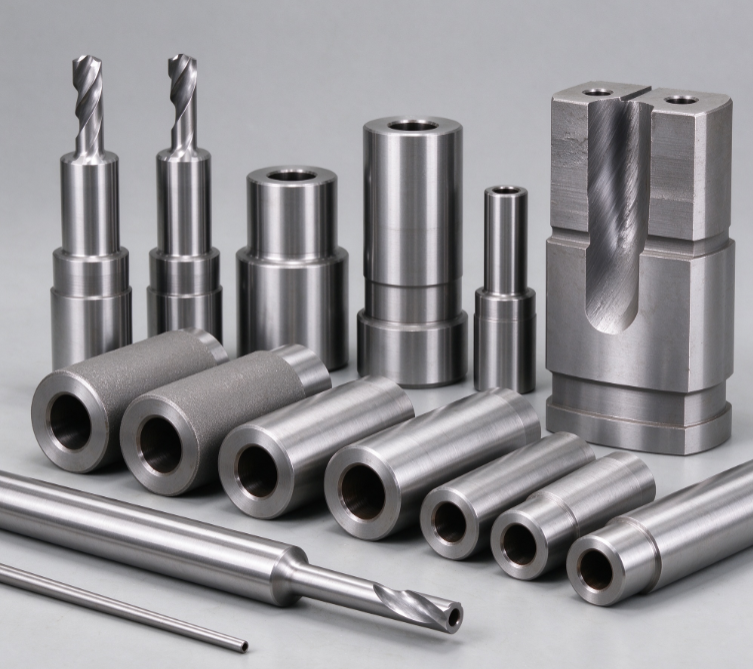
A deep hole is not simply a long hole. Its depth-to-diameter ratio, straightness, material, chip evacuation, surface requirement, and inspection method all affect whether a component will work in service. This guide explains how buyers can evaluate a CNC deep hole drilling service before releasing a drawing, with practical points for molds, shafts, roller sleeves, tubes, tube sheets, hydraulic cylinder parts, and other long components.
Contents
1. Define the hole and the component function, 2. Review the machining capability, 3. Ask how the process will be controlled, 4. Plan inspection and documentation, 5. Prepare a useful RFQ, 6. Frequently asked questions
Define the Hole and the Component Function
The first step is to describe what the hole must do, not only how deep it is. A fluid passage, a guide bore, a cooling channel in a mold, and a structural hole in a shaft may have different requirements. The drawing should identify bore diameter, depth, blind or through geometry, entry and exit conditions, positional relationship, surface finish, and any sealing or sliding function. If the hole connects to cross-drilled passages, those intersections should be shown clearly because they influence the drilling sequence and inspection plan.
Material also matters. Alloy steel, stainless steel, copper alloys, titanium alloys, nickel alloys, and high-temperature alloys do not cut in the same way. Work-hardening, heat generation, chip shape, and tool wear can change the stable drilling window. Jingzuan’s public capability information specifically lists deep hole drilling for molds, shafts, roller sleeves, tube parts, and non-standard components, along with experience in difficult materials such as nickel alloys, titanium alloys, and high-temperature alloys. The useful conclusion for a buyer is to provide the exact material grade and condition instead of asking for a general price for “steel.”
RFQ information | Why it affects the route | What to clarify |
Bore diameter and depth | Sets the depth-to-diameter challenge and tool choice. | Are dimensions finished or pre-machined? |
Material and hardness | Changes cutting load, heat, chip control, and tool wear. | Is the material normalized, hardened, or solution treated? |
Straightness and position | Determines fixturing, references, and measurement needs. | Which datum controls the hole axis? |
Blind or through hole | Affects chip evacuation, breakthrough risk, and bottom form. | Is a flat, conical, or radiused bottom required? |
Quantity and batch plan | Influences setup, tool-life planning, and repeatability checks. | Will the same drawing be reordered? |
Review the Machining Capability
A capable CNC deep hole drilling supplier should explain the complete route rather than quote only a machine name. Ask whether the job needs pilot drilling, deep hole drilling, boring, honing, turning, or a combination. A drilled hole may need boring or honing when the application requires a more controlled diameter, surface condition, or fit.
Jingzuan states a public deep hole drilling range of 2–150 mm in diameter, boring and honing capacity up to 1,500 mm, machining length up to 10 m, and handling capacity up to 25 tons. These figures are useful screening information, not a substitute for drawing review. A part within the headline range can still require a special fixture, different tooling, a staged operation, or an agreed inspection method. Ask the supplier to confirm the actual feasible range for your material, geometry, and tolerance.
Ask How the Process Will Be Controlled
Deep hole quality depends on control during machining, not only on final inspection. The process plan should consider workpiece support, alignment, tool entry, coolant delivery, chip evacuation, tool wear, and the order of drilling and finishing operations. For a long shaft or tube, support conditions can affect vibration and hole axis. For a difficult alloy, tool wear can gradually change the result even when the program has not changed.
Request a clear explanation of the datums used to locate the part and how the bore axis will be related to external features. If the hole must align with a flange, cross-hole, sealing face, or mating component, that relationship should be treated as a functional requirement. A supplier that asks these questions early is helping prevent a part that meets an isolated bore dimension but fails in assembly.
Plan Inspection and Documentation
Inspection should match the risk of the component. Depending on the drawing, useful checks may include bore diameter at multiple depths, straightness, cylindricity, concentricity, positional accuracy, surface roughness, and visual checks for tool marks or burrs. The method and acceptance limit should be agreed before production.
Jingzuan’s website describes dimensional checks, inspection records, and third-party inspection support when confirmed for the project. Buyers should still state which documents are required: a dimensional report, material certificate, heat-treatment record, surface-finish result, nonconformance record, or other project-specific evidence. For critical components, align the drawing revision, approved sample, and inspection report so later batches are judged against the same reference.
Prepare a Useful RFQ
A practical RFQ package includes the latest 2D drawing, 3D model where available, material grade and condition, quantity, tolerance, hole geometry, surface requirements, heat treatment, inspection scope, packaging, delivery location, and target schedule. If the component is part of a pressure, hydraulic, nuclear, aerospace, petrochemical, or heavy-machinery assembly, explain the service function without disclosing information that the supplier does not need. This context helps the machining team identify which features deserve the most attention.
Compare quotations on the same scope. Check whether material, drilling, boring, honing, turning, finishing, inspection, packaging, fixtures, and transportation are included. A low initial price is difficult to compare if one quotation assumes a rough bore while another includes final honing and additional records.
Frequently Asked Questions
What files should I send for a CNC deep hole drilling quotation?
Send the latest drawing, 3D model if available, material and hardness, quantity, bore depth and diameter, tolerance, surface requirement, inspection scope, and delivery location. Mark the datum and any assembly-critical relationship.
Is deep hole drilling enough for a finished bore?
Not always. Some parts can be completed by drilling, while others need boring, honing, turning, or a combination to achieve the required size, surface condition, or alignment. The answer depends on the drawing and application.
Can long and heavy parts be machined in one supplier process?
They may be, but the supplier should confirm handling, workholding, machine travel, support, and inspection arrangements for the actual part. Public capability figures are a starting point; drawing review is still required.
Summary
Selecting a CNC deep hole drilling service should begin with the function of the hole and end with an agreed inspection plan. Material, geometry, support, tool control, finishing, and documentation all affect the result. A detailed RFQ gives a supplier enough information to recommend a realistic route and gives the buyer a fair basis for comparing cost, quality, and delivery.