How Advanced Manufacturing Is Transforming Nuclear Power Components
Behind Every Reliable Nuclear Power Plant Is a Network of High-Precision Components
People often think about reactors when nuclear power comes up. Fuel assemblies, containment buildings, cooling towers—those tend to grab the attention. But engineers usually look somewhere else first.
They look at the components.
A nuclear power plant is built from thousands of individual parts working together under conditions that leave very little room for error. Pumps, valve bodies, pressure vessel internals, pipe supports, heat exchanger tubesheets, fasteners, shielding structures, instrumentation housings...none of these parts are particularly eye-catching. Yet every one of them has to perform exactly as designed, sometimes for 40, 60, or even 80 years.
That's why Nuclear Power Components have become one of the most demanding segments of modern manufacturing.
And things are changing.
Digital machining centers, intelligent inspection systems, advanced alloys, additive manufacturing, and stricter quality management standards are reshaping how nuclear components are designed and produced. Buyers are no longer looking only at production capacity. They're evaluating engineering capability, traceability, process stability, and long-term reliability.
For manufacturers, this shift raises the bar.
For procurement teams and project managers, it creates new opportunities—but also new questions.
Table of Contents
· Why Nuclear Power Components Matter More Than Ever
· What Are Nuclear Power Components?
· Major Categories of Nuclear Components
· How Advanced Manufacturing Is Changing the Industry
· Material Selection for Nuclear Applications
· Manufacturing Technologies Behind High-Reliability Components
· Material Comparison Table
Why Nuclear Power Components Matter More Than Ever
The global energy industry is changing quickly.
As countries pursue lower-carbon electricity generation, nuclear energy has regained attention as a stable source of baseload power. According to the International Energy Agency (IEA), global electricity demand is expected to continue rising over the coming decades, while many countries are extending the operating life of existing nuclear plants and investing in new reactor technologies, including Small Modular Reactors (SMRs).
That trend has one direct consequence.
Demand for high-quality Nuclear Power Components continues to grow.
Unlike many industrial products, nuclear components operate under conditions involving:
· High temperature
· High pressure
· Long-term mechanical stress
· Radiation exposure
· Strict regulatory oversight
Failure isn't simply a maintenance issue.
It can affect plant availability, operating costs, regulatory compliance, and public confidence.
This is why manufacturers serving the nuclear industry typically work under some of the world's most demanding engineering and quality requirements.
What Are Nuclear Power Components?
The term Nuclear Power Components refers to the mechanical, structural, and engineered parts used throughout a nuclear power generation system.
These components may appear similar to those used in conventional power plants, but their design requirements are often much stricter.
Depending on the application, components must withstand:
· Thermal cycling
· Corrosion
· Fatigue loading
· Radiation effects
· High-pressure environments
· Long operating life
Many critical components are manufactured according to internationally recognized standards such as:
· ASME Boiler and Pressure Vessel Code (BPVC)
· ASME Section III
· ISO 19443
· ASME NQA-1
· RCC-M (widely used in France and other nuclear projects)
Meeting these standards requires more than precise machining.
It requires documented manufacturing processes, qualified personnel, traceable materials, and extensive inspection records.
Major Categories of Nuclear Power Components
Although every nuclear facility is different, most systems rely on several major categories of components.
Pressure Boundary Components
These are among the most safety-sensitive parts within a nuclear power plant.
Typical examples include:
· Reactor pressure vessel components
· Steam generator parts
· Pressure-retaining flanges
· Nozzles
· Valve bodies
· High-pressure piping components
These products often require heavy forging, precision machining, non-destructive examination (NDE), and rigorous documentation throughout manufacturing.
Structural Components
Structural parts support critical systems while maintaining dimensional stability over decades of operation.
Examples include:
· Equipment support structures
· Steel brackets
· Mounting frames
· Pipe supports
· Shielding assemblies
· Anchor systems
Although these components may not contact radioactive media directly, they still require exceptional mechanical reliability.
Precision Machined Components
Modern nuclear plants contain thousands of precision nuclear components.
Examples include:
· Pump shafts
· Bearing housings
· Instrumentation housings
· Connector assemblies
· Mechanical seals
· Actuator components
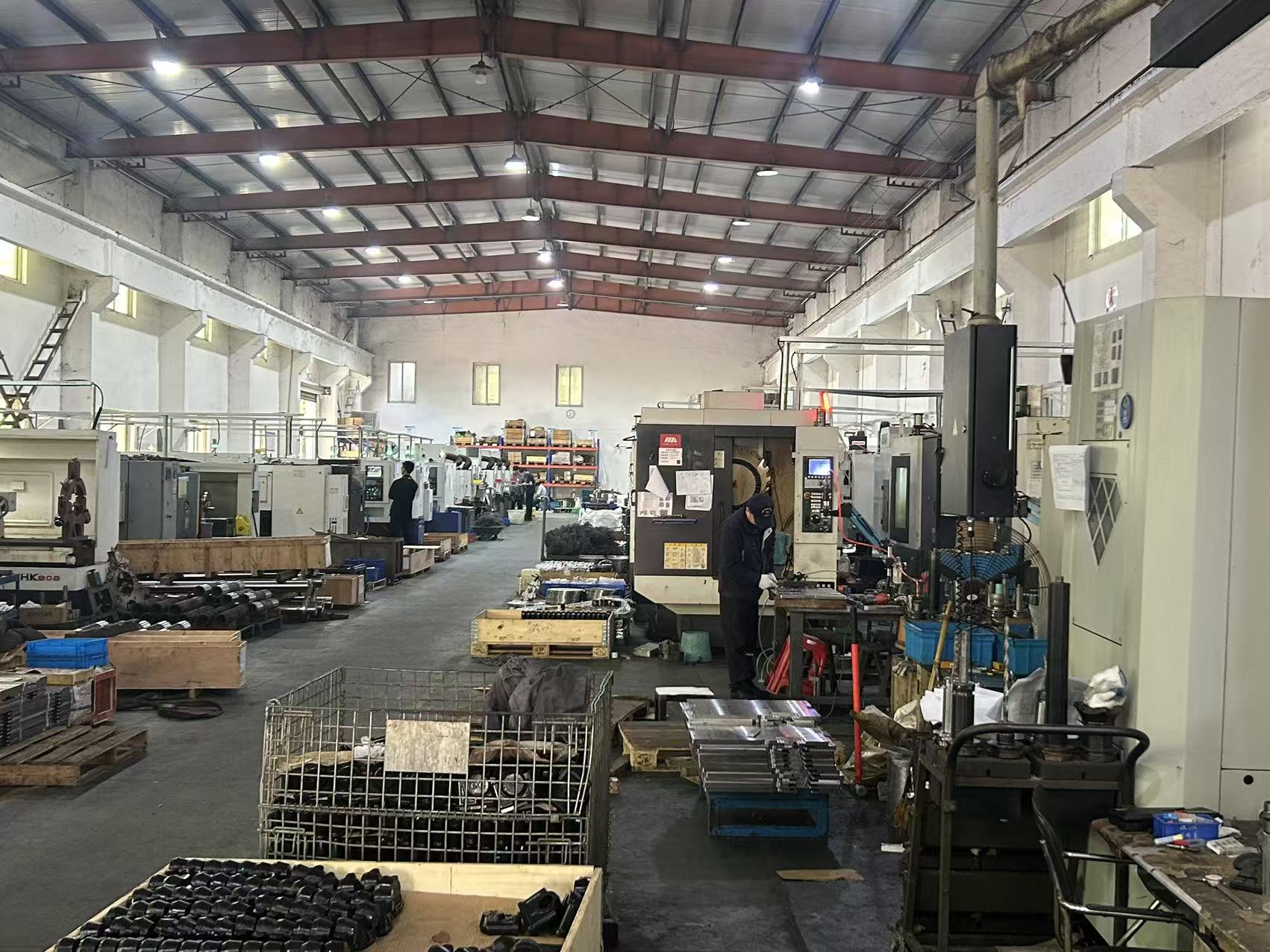
Many of these parts are manufactured using advanced CNC machining centers capable of maintaining micron-level dimensional accuracy.
Heat Transfer Components
Efficient heat transfer is essential for safe plant operation.
This category includes:
· Heat exchanger tubesheets
· Tube support plates
· Condenser components
· Cooling system parts
Surface finish, dimensional accuracy, and material cleanliness become especially important for these applications.
How Advanced Manufacturing Is Reshaping Nuclear Power Components
Twenty years ago, manufacturing nuclear components relied heavily on operator experience.
Experience still matters.
But today's production environment looks very different.
Advanced manufacturing combines traditional engineering with digital technologies that improve consistency, traceability, and production efficiency.
Several developments are driving this transformation.
Digital CNC Machining
Five-axis CNC machining has significantly improved the production of complex nuclear-grade components.
Compared with conventional machining, modern CNC systems offer:
· Higher dimensional accuracy
· Better repeatability
· Reduced setup time
· Improved surface finish
· Automated tool compensation
For critical sealing surfaces and precision interfaces, these improvements directly contribute to long-term equipment reliability.
Intelligent Process Monitoring
Manufacturing data is becoming just as valuable as the finished component.
Many manufacturers now monitor:
· Cutting forces
· Tool wear
· Machine vibration
· Temperature
· Production parameters
Real-time monitoring helps detect process deviations before they affect product quality.
Rather than reacting to defects, manufacturers increasingly focus on preventing them.
Additive Manufacturing
Additive manufacturing—often referred to as industrial metal 3D printing—is gradually entering selected nuclear applications.
Although it won't replace conventional machining for every component, it offers several advantages for:
· Complex internal geometries
· Prototype development
· Low-volume production
· Spare parts manufacturing
Organizations including the U.S. Department of Energy (DOE) and Oak Ridge National Laboratory (ORNL) have conducted extensive research into the use of additive manufacturing for nuclear energy applications, particularly for replacement components and advanced reactor technologies.
Automated Inspection Technologies
Inspection has evolved considerably.
Instead of relying solely on manual measurements, manufacturers increasingly use:
· Coordinate Measuring Machines (CMM)
· Laser scanning
· Optical measurement systems
· Ultrasonic testing (UT)
· Radiographic testing (RT)
· Eddy current testing (ECT)
These technologies improve measurement repeatability while generating digital inspection records that support complete product traceability.
Material Selection: The Foundation of Reliable Nuclear Components
Choosing the right material is one of the most important engineering decisions in any nuclear project.
Strength alone isn't enough.
Materials must maintain stable mechanical properties after years of exposure to elevated temperatures, pressure, corrosion, and—in some applications—radiation.
Common materials include:
· Austenitic stainless steels
· Ferritic stainless steels
· Low-alloy steels
· Nickel-based alloys
· Duplex stainless steels
· High-strength carbon steels
Material selection depends on factors such as:
· Operating temperature
· Corrosion environment
· Mechanical loading
· Welding requirements
· Fatigue resistance
· Radiation tolerance
· Expected service life
One material rarely meets every requirement.
Selecting the most appropriate alloy always involves balancing performance, manufacturability, regulatory compliance, and lifecycle cost.
Common Materials Used in Nuclear Power Components
Material | Typical Applications | Main Advantages | Engineering Considerations |
304/316 Stainless Steel | Piping, valves, structural parts | Excellent corrosion resistance | Moderate strength |
Low-Alloy Steel | Pressure vessels | High strength and toughness | Requires protective measures against corrosion |
Inconel Alloys | Steam generators, high-temperature systems | Outstanding heat and corrosion resistance | High material cost |
Duplex Stainless Steel | Cooling systems | High strength with excellent corrosion resistance | More demanding welding procedures |
Carbon Steel | Structural supports | Economical and easy to fabricate | Limited corrosion resistance |
Each material serves a different purpose.
For example, stainless steel nuclear components are widely used where corrosion resistance is critical, while nickel-based alloys perform exceptionally well in high-temperature environments that demand both strength and oxidation resistance.
Manufacturing Precision Is Becoming a Competitive Advantage
A decade ago, buyers often compared suppliers based on machining capacity or production lead time.
Today, the conversation has shifted.
Engineering capability, digital quality management, process traceability, and compliance with international nuclear standards are becoming equally important.
As advanced manufacturing technologies continue to mature, the difference between average suppliers and industry leaders is no longer defined by equipment alone. It is increasingly determined by how effectively they integrate materials science, precision machining, inspection technology, and documented quality systems into one reliable manufacturing process.
Quality Assurance: Reliability Starts Long Before Final Inspection
One misconception still comes up during supplier evaluations.
Some buyers believe that if a component passes the final inspection, quality has been achieved.
In the nuclear industry, that's simply not how quality works.
A Nuclear Power Component is expected to remain reliable for decades under demanding operating conditions. That level of confidence cannot be inspected into a product at the end of production—it has to be built into every manufacturing step.
This philosophy is reflected in the quality systems used throughout the nuclear supply chain.
Material Traceability
Every qualified manufacturer should be able to answer a simple question:
Where did this material come from?
For nuclear-grade components, complete traceability is not optional. Every raw material batch should be linked to:
· Mill Test Certificates (MTC)
· Heat numbers
· Chemical composition reports
· Mechanical property reports
· Receiving inspection records
As production continues, that traceability extends to machining operations, welding procedures, heat treatment records, dimensional inspections, and final documentation.
If an issue is discovered years later, engineers must be able to trace a component back through its entire manufacturing history.
Process Qualification
Unlike conventional industrial products, many nuclear manufacturing processes require formal qualification before production begins.
Typical qualified processes include:
· Welding Procedure Qualification Records (PQR)
· Welding Procedure Specifications (WPS)
· Heat treatment procedures
· Non-destructive examination procedures
· Machining process validation
· Surface treatment specifications
Consistency matters more than speed.
A supplier capable of repeating the same process thousands of times with minimal variation is generally more valuable than one offering the shortest lead time.
Non-Destructive Examination (NDE)
Many critical nuclear equipment manufacturing projects rely heavily on Non-Destructive Examination because defects cannot always be detected visually.
Depending on component type, common inspection methods include:
· Ultrasonic Testing (UT)
· Radiographic Testing (RT)
· Magnetic Particle Testing (MT)
· Liquid Penetrant Testing (PT)
· Eddy Current Testing (ECT)
· Visual Testing (VT)
Rather than damaging the part during testing, these methods verify internal integrity while keeping the component fully functional.
For pressure-retaining parts, NDE often becomes one of the most important acceptance criteria.
International Standards That Define Nuclear Manufacturing
Nuclear manufacturing is one of the world's most regulated industrial sectors.
Different countries may adopt different codes, but several international standards appear repeatedly across major projects.
Standard | Primary Focus | Typical Application |
ASME BPVC Section III | Nuclear component design and construction | Reactor vessels, piping, pressure equipment |
ASME NQA-1 | Nuclear quality assurance | Manufacturing quality systems |
ISO 19443 | Nuclear supply chain quality management | Nuclear suppliers worldwide |
ISO 9001 | General quality management | Manufacturing organizations |
RCC-M | Mechanical equipment for nuclear islands | French-designed nuclear projects |
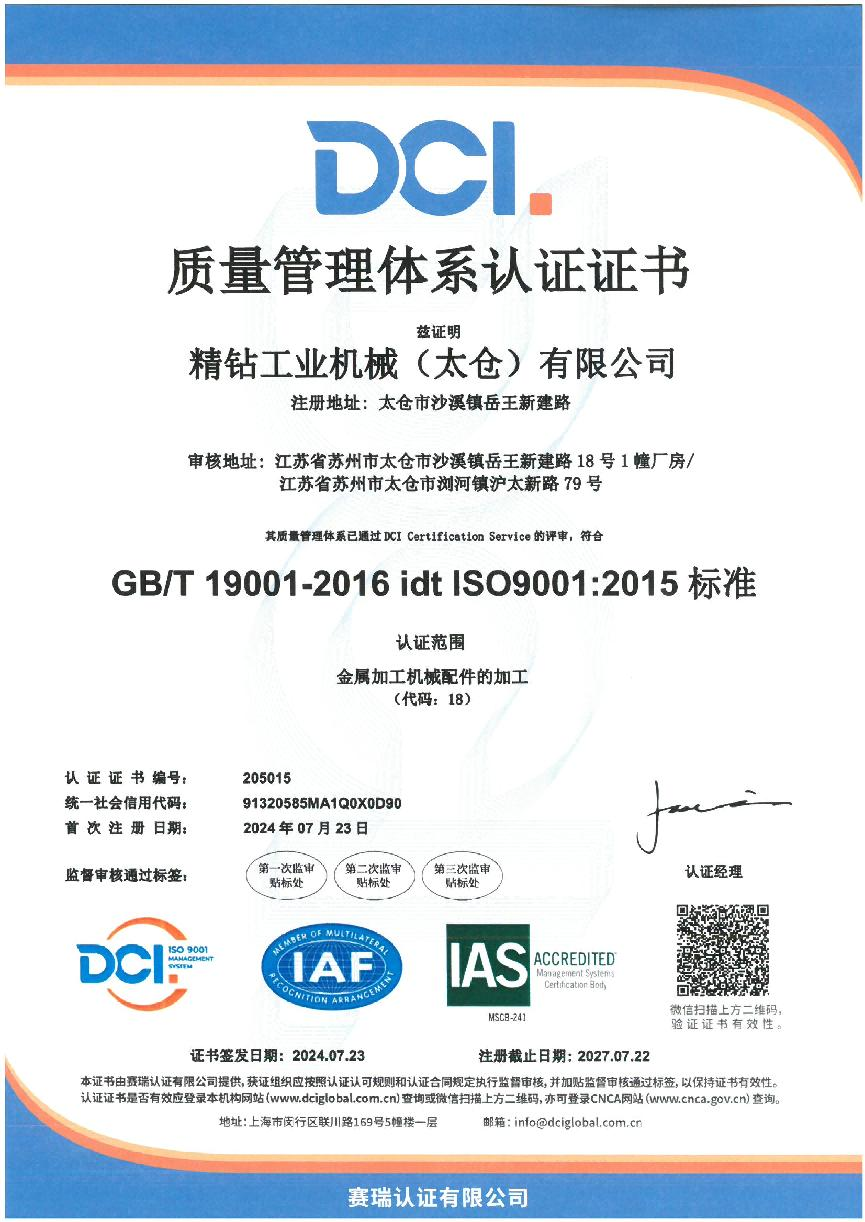
Among these, ISO 19443, published specifically for organizations supplying the nuclear sector, has become increasingly important. Built upon ISO 9001, it introduces additional requirements for nuclear safety culture, risk management, counterfeit prevention, and supplier oversight.
For buyers, certification alone shouldn't determine supplier selection.
However, it provides evidence that the manufacturer operates under structured and internationally recognized management systems.
Choosing the Right Nuclear Power Components Supplier
Finding a machine shop isn't difficult.
Finding a supplier capable of consistently delivering qualified Nuclear Power Components is another matter entirely.
Experienced procurement teams usually evaluate several factors beyond production capacity.
Engineering Support
Strong suppliers don't simply manufacture to print.
They review drawings, identify manufacturability risks, recommend material improvements, and sometimes reduce production costs before machining even begins.
That engineering input often saves far more than aggressive price negotiations.
Manufacturing Capability
Modern precision nuclear components require more than advanced CNC equipment.
Buyers should understand whether the supplier possesses:
· Multi-axis machining capability
· Heavy machining capacity
· Precision grinding
· Welding qualifications
· Heat treatment control
· Assembly capability
· Dimensional inspection laboratories
The broader the in-house capability, the lower the coordination risk throughout production.
Documentation Management
Documentation is sometimes overlooked until project delivery.
Then it suddenly becomes one of the largest tasks.
A qualified supplier should be capable of delivering complete documentation packages including:
· Material certificates
· Inspection reports
· Dimensional reports
· NDE records
· Calibration certificates
· Manufacturing records
· Traceability documentation
For many EPC contractors, documentation quality is almost as important as component quality.
Common Procurement Mistakes
Over the years, several purchasing mistakes appear repeatedly across industrial projects.
The nuclear sector is no exception.
Selecting Suppliers Based Only on Price
Lower quotations often look attractive during procurement.
But nuclear projects rarely measure success by purchase price alone.
Unexpected delays caused by:
· Documentation errors
· Dimensional nonconformities
· Material substitutions
· Inspection failures
can create costs far exceeding the initial savings.
Lifecycle value usually matters far more than unit price.
Underestimating Lead Time
Many custom nuclear power components require:
· Forging
· Heat treatment
· Rough machining
· Stress relieving
· Precision machining
· Multiple inspections
· Customer witness testing
Each stage requires planning.
Waiting until the last moment often leaves very few qualified suppliers available.
Ignoring Supplier Experience
Two suppliers may own similar machining centers.
That doesn't necessarily mean they deliver the same results.
Experience with nuclear documentation, regulatory compliance, process qualification, and customer audits often separates specialized manufacturers from general machine shops.
Case Study: Additive Manufacturing at Oak Ridge National Laboratory
One widely recognized example of advanced manufacturing in the nuclear industry comes from Oak Ridge National Laboratory (ORNL) in the United States.
ORNL has worked extensively with the U.S. Department of Energy (DOE) to evaluate metal additive manufacturing for nuclear applications.
One notable project involved the development and qualification of a 3D-printed stainless steel reactor component, demonstrating that additive manufacturing could significantly shorten production lead times for certain replacement parts while maintaining stringent engineering requirements.
Although conventional machining remains the preferred solution for many safety-related components, the project demonstrated several important advantages:
· Faster prototype development
· Reduced manufacturing lead times
· Improved flexibility for legacy replacement parts
· Digital manufacturing documentation
Research from ORNL continues to support future deployment of advanced manufacturing technologies in both existing nuclear facilities and next-generation Small Modular Reactors (SMRs).
Lifecycle Value Matters More Than Purchase Price
Procurement decisions increasingly focus on long-term project performance rather than initial cost.
The following comparison illustrates why.
Evaluation Factor | Lower-Cost Supplier | Qualified Nuclear Supplier |
Initial Purchase Price | Lower | Moderate |
Engineering Support | Limited | Comprehensive |
Material Traceability | Basic | Complete |
Documentation | Minimal | Fully compliant |
Inspection Capability | Outsourced | In-house laboratory |
Quality Risk | Higher | Lower |
Long-Term Project Cost | Potentially higher | Often lower |
Especially in critical infrastructure projects, reducing project risk often generates far greater value than achieving the lowest quotation.
Frequently Asked Questions
What materials are most commonly used for Nuclear Power Components?
Depending on application requirements, commonly used materials include stainless steel, low-alloy steel, nickel-based alloys, duplex stainless steel, and carbon steel. Material selection depends on operating temperature, corrosion conditions, pressure, radiation exposure, and service life requirements.
Are all Nuclear Power Components manufactured under ASME standards?
Not always.
Many international projects follow ASME Section III, while others may adopt RCC-M or country-specific nuclear codes. Applicable standards depend on reactor design, project location, and regulatory authority.
Why is traceability so important?
Traceability allows every component to be linked to its raw material, manufacturing records, inspection results, and testing history.
This supports regulatory compliance, simplifies maintenance, and provides confidence throughout the component's operating life.
How should buyers evaluate a Nuclear Power Components manufacturer?
Rather than focusing solely on production equipment, buyers should assess engineering capability, quality management systems, inspection resources, certification status, documentation control, previous nuclear project experience, and long-term manufacturing stability.
Final Thoughts
As nuclear energy continues to expand through plant life extension programs, new reactor construction, and the development of Small Modular Reactors, expectations placed on Nuclear Power Components will only become more demanding.
Advanced manufacturing is changing more than production efficiency. It is improving machining accuracy, strengthening process consistency, enhancing digital traceability, and supporting higher levels of quality assurance across the entire nuclear supply chain.
For engineers, project managers, and procurement professionals, selecting the right manufacturing partner is no longer simply about production capacity. It is about choosing a supplier with proven engineering expertise, qualified manufacturing processes, internationally recognized quality systems, and the ability to deliver reliable components throughout the entire project lifecycle.
If you're evaluating suppliers for an upcoming nuclear energy project, request detailed information on material traceability, manufacturing qualifications, inspection capabilities, and quality certifications—not just pricing. Those factors often have the greatest impact on long-term reliability, regulatory compliance, and total project value.